Night Street Photography: Stories After Dark
Words and photographs by Ishay Lindenberg
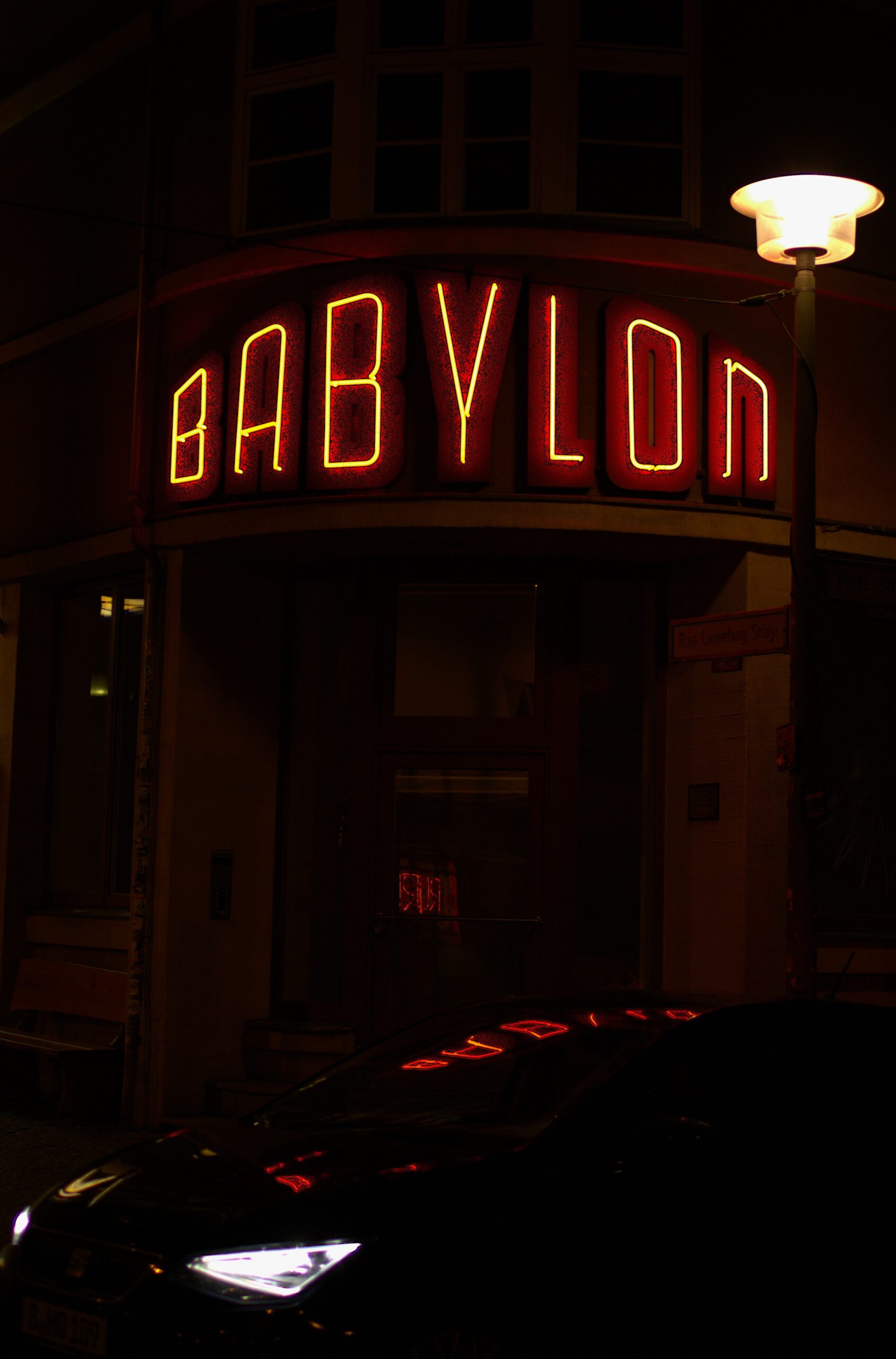
At Babylon cinema in Berlin, it was the red neon against the black night that made me stop. I made several photographs, including frames with people passing through. But the one without people is the strongest for me. Nothing competes with that red sign and the darkness around it.
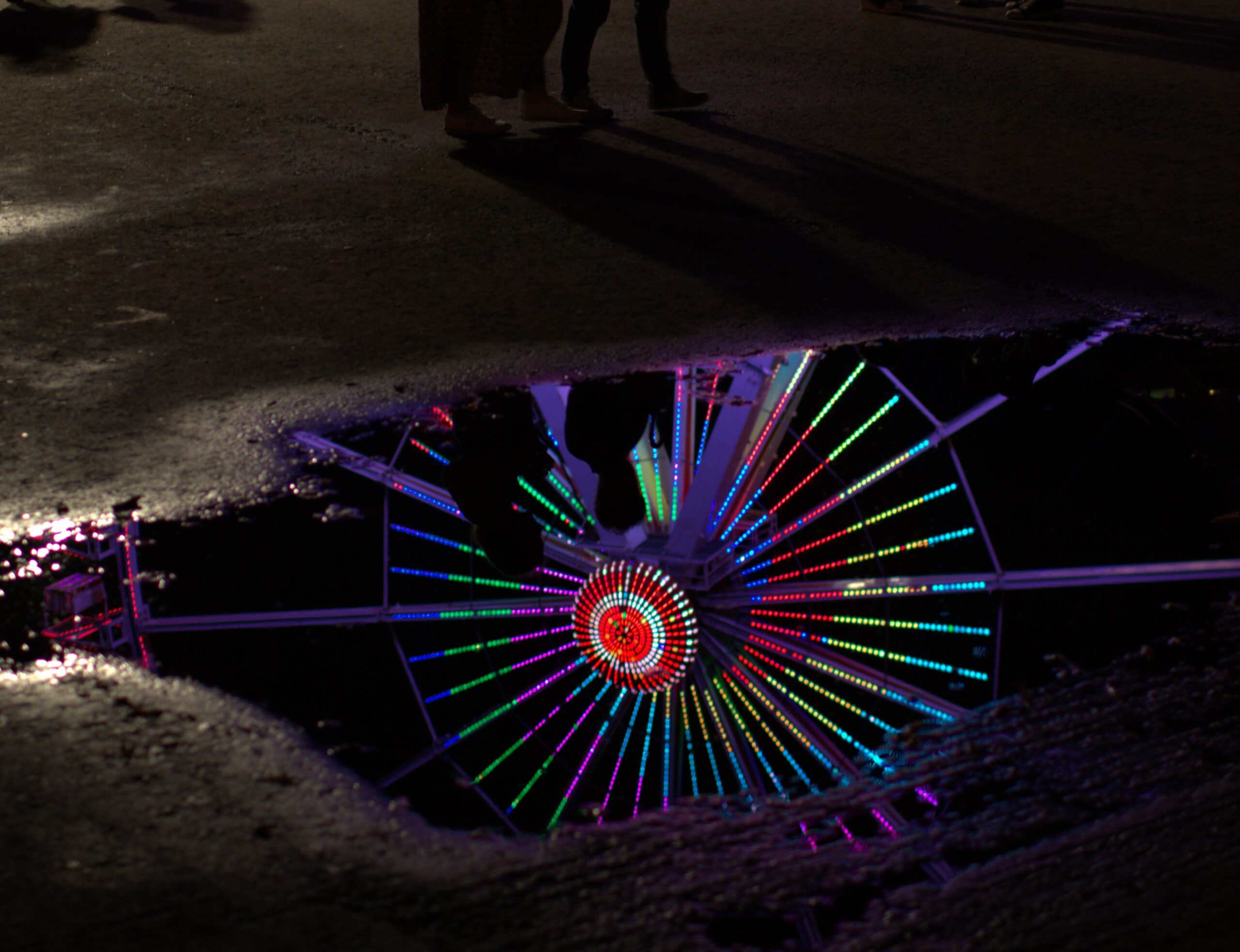
At the Ferris wheel, it was almost the opposite. The reflection in a puddle interested me first. Then a couple walked into the frame, and the photograph changed. Their presence gave the scene the life I was looking for.
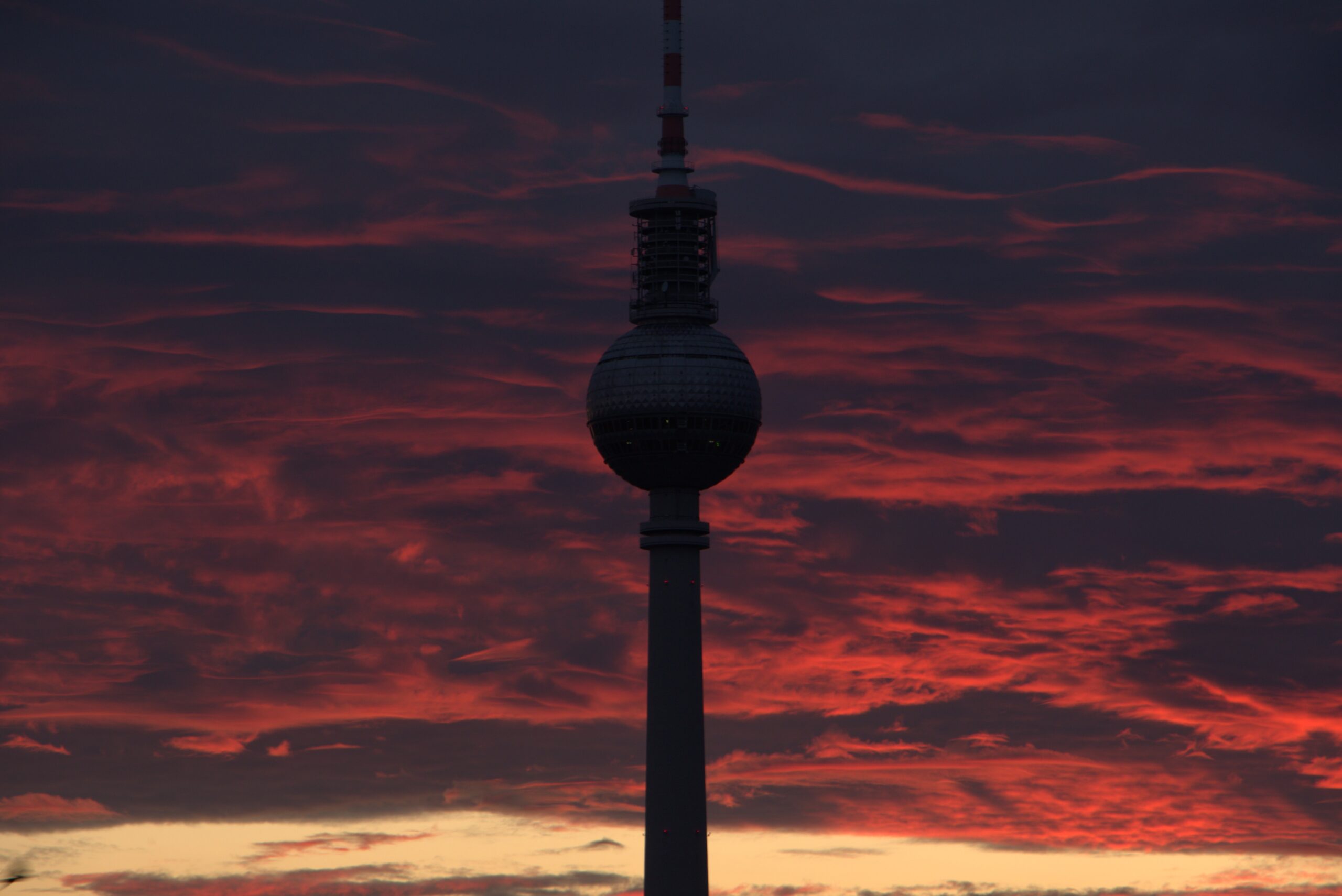
The six photographs here were made in Germany, around 9 pm or later. They include artificial light, movement, reflections and one August sunset seen from my window in Berlin. That last photograph belongs to the transition into night rather than full darkness.
On this page
- Neon and darkness at Babylon
- A balloon in front of the TV Tower
- When people complete a reflection
- Movement at a tram stop
- The last light before night
- A story in a shop window
- Exposure and focus after dark
Neon and darkness at Babylon cinema
The dark areas are part of this photograph, not simply places where information is missing. The cinema sign holds the frame. Its red light appears again on the car below, making a connection between the building and the street.
What attracted me was the combination of the black night and Babylon’s particular red neon. I have other frames with people, but I prefer this one without them. It leaves more room for that relationship between colour and darkness.
A balloon in front of the TV Tower
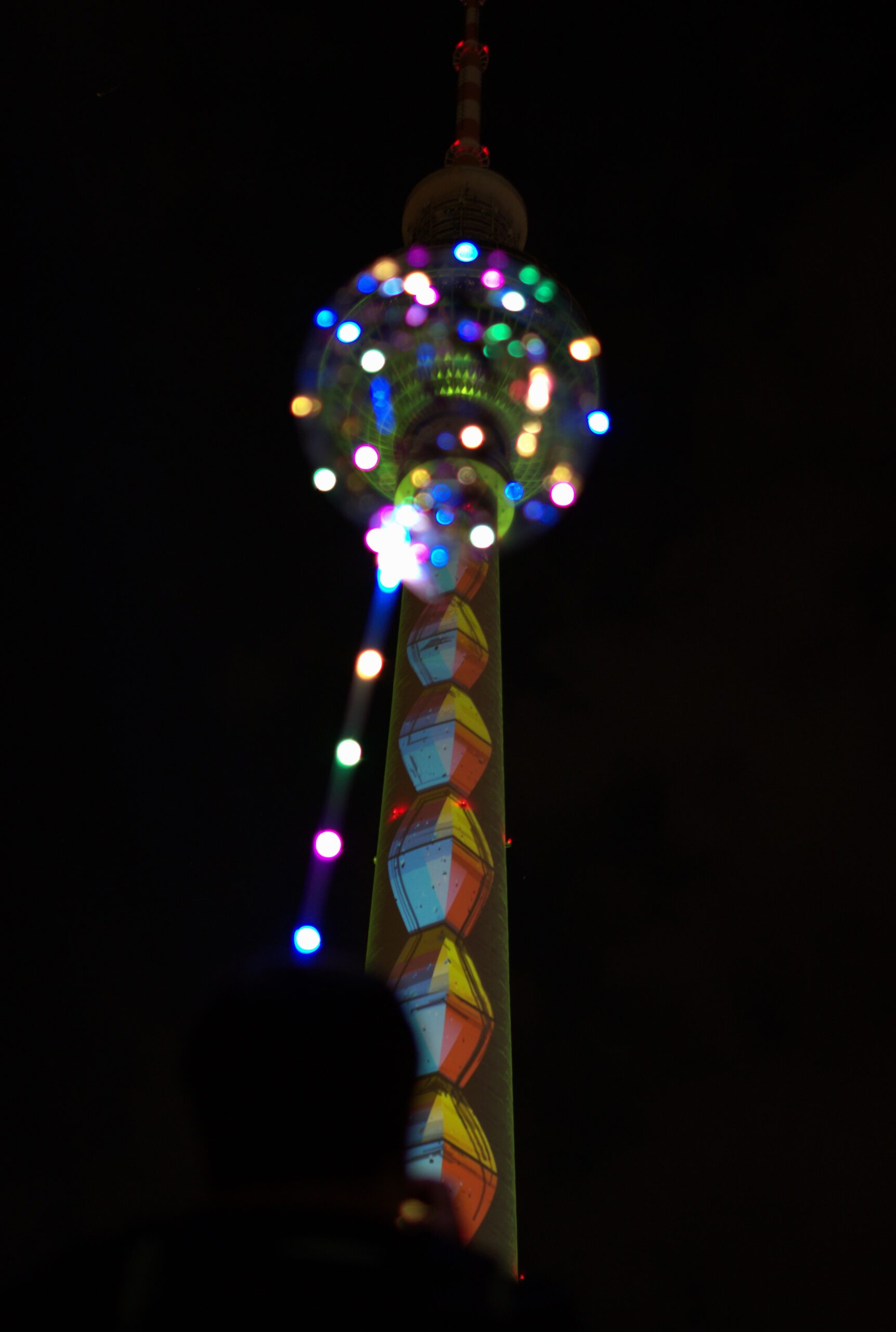
During the Festival of Lights, I photographed an LED balloon near Berlin’s TV Tower. I like this shot because it feels full of life. The balloon’s coloured points sit across the tower, changing how the familiar structure appears.
When people complete a reflection
The Ferris wheel reflected in a puddle was already an interesting subject. Then a couple walked into the frame. Their presence turned the reflection into a moment rather than only a pattern.
Movement at a tram stop
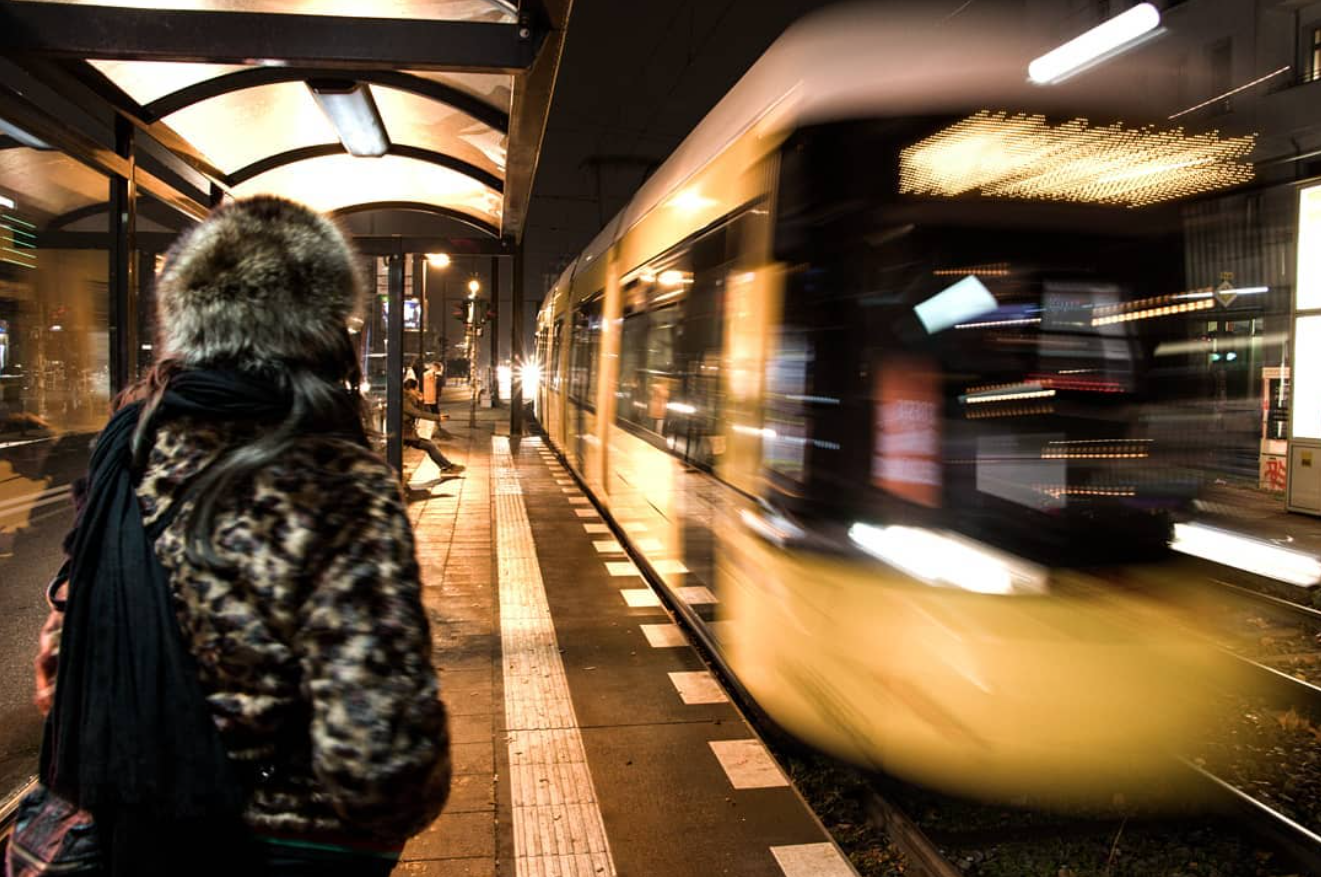
At the tram stop, I liked the movement of the tram against the woman waiting. I used a long exposure to blur the tram while keeping the woman in focus and sharp.
That contrast was what I wanted: her stillness against the moving tram. If everything had blurred equally, it would have been a different photograph.
Ishay Lindenberg
The last light before night
One August evening, around 9 pm, I saw this sky from my window in Berlin. The sunset behind the TV Tower was extraordinary. There are no filters creating those colours. This was the sunset I saw that evening.
A story in a shop window
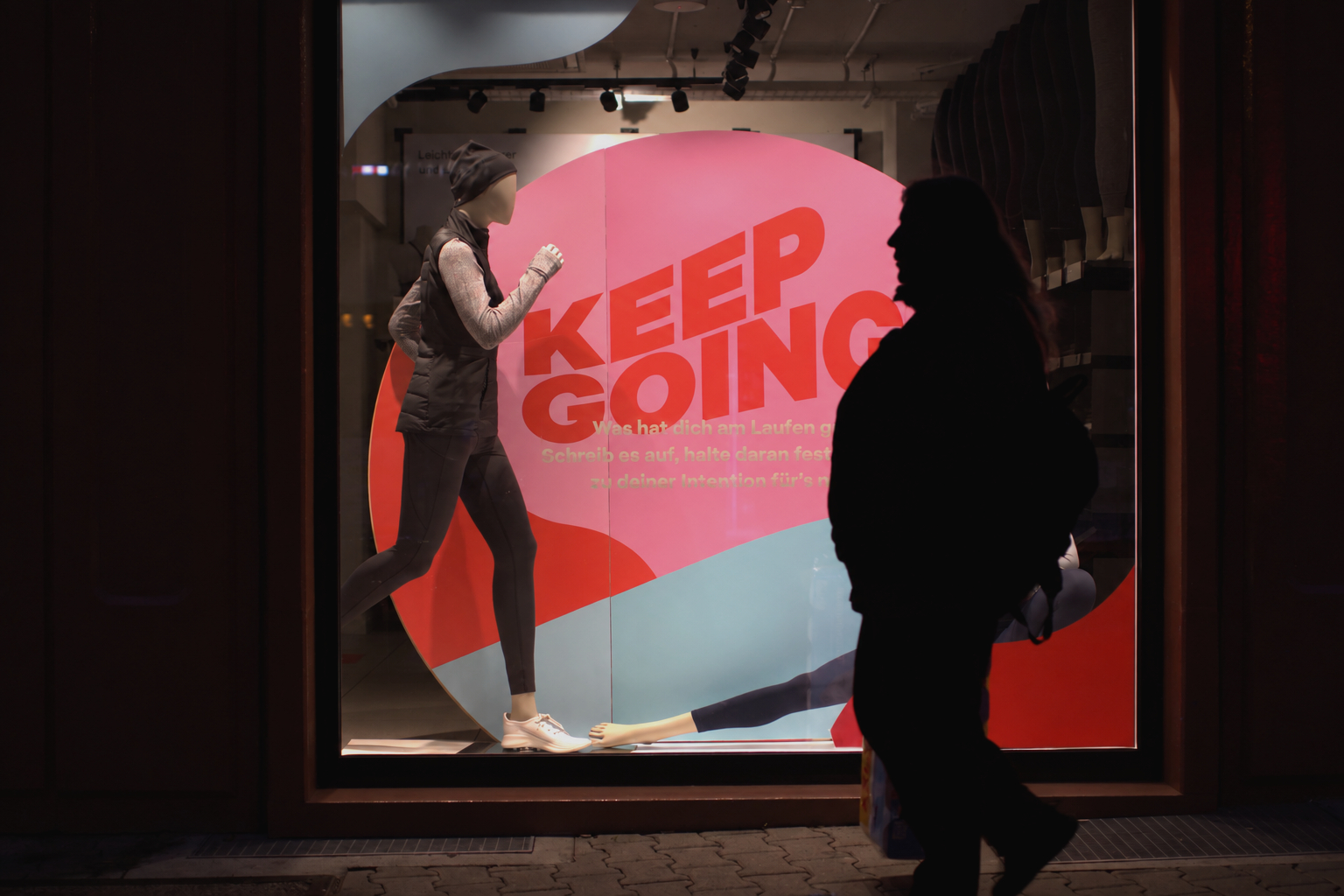
The words in this window say “KEEP GOING”. People kept walking past them, and that connection interested me. The window gave me several good moments. This is one of my favourites.
Exposure and focus after dark
There is no single setting for night street photography. A moving tram, a person walking past a window and a distant building ask different things of the camera. Start with the subject and the result you want, then decide what compromises are acceptable.
Decide what must remain sharp
If the expression or gesture matters, use a shutter speed that holds it clearly enough. If movement is the subject, a slower exposure can describe it. Compare the result at useful magnification rather than trusting a small preview.
Decide which light matters
An illuminated sign and a dark wall may be far apart in brightness. Check whether the important colour or lettering is losing detail. Not every shadow needs to be opened.
Give focus something clear to work with
Low-contrast areas can be difficult to focus on. Look for a defined edge or a lit part of the subject at the distance you need. For the broader relationship between aperture, shutter speed and available light, see my guide to lighting and exposure in street photography.
Questions about night street photography
Do I need a tripod?
Not for every scene. Handheld photography can suit moving people and changing viewpoints. A tripod can help with longer exposures of a fixed scene, but it will not freeze a person or vehicle moving through that exposure.
Can a night street photograph work without people?
For me, yes. I prefer the Babylon frame without people. The sign, building and car still describe a human environment.
Is 9 pm always the right time to start?
No. Light depends on place, season, weather and date. My August sunset is a reminder to look at the actual sky, not only the clock.
A small exercise for your next evening walk
Choose one source of light: a shop window, a sign or a lit shelter. Make a frame before anyone enters it. Then watch what changes as people pass. Keep both kinds of picture long enough to compare them.
If you are planning a walk here, my guide to places to photograph in Berlin can help you choose an area to explore. Which of your own night photographs works because somebody entered the frame, and which works because nobody did?